
Choosing the right aquarium equipment can mean the difference between a thriving underwater ecosystem and a constant struggle with maintenance problems. Whether you’re setting up your first tank or upgrading an established system, the sheer number of filters, heaters, lights, and accessories available can feel overwhelming. Before clicking “buy” on that highly-rated piece of equipment, taking time to ask the right questions will save you money, frustration, and potentially the health of your fish.
This guide walks you through the essential questions every aquarist should consider before investing in new equipment. We’ll examine the criteria that matter most, compare popular options across different categories, and help you identify which products align with your specific tank setup and experience level.
Essential Criteria: What to Evaluate Before Any Purchase
Before diving into specific product reviews, establish a clear framework for evaluation. Not every piece of equipment suits every aquarium, and marketing claims often obscure what truly matters for your particular situation.
Start by confirming compatibility with your tank size. A filter rated for 50 gallons won’t perform adequately in a 75-gallon system, no matter how many positive reviews it has accumulated. Many manufacturers provide minimum and maximum capacity ratings, but experienced aquarists often recommend choosing equipment rated slightly above your actual tank volume to ensure adequate performance.
Consider the specific requirements of your livestock. Saltwater tanks demand equipment that resists corrosion and can handle higher mineral content. Planted tanks need lighting with appropriate spectrum and intensity for photosynthesis. Sensitive species like discus require stable temperatures and gentle water flow, while African cichlids thrive with strong filtration and higher pH levels. Generic equipment rarely serves specialized needs effectively.
Evaluate energy consumption and operating costs. An inexpensive heater that runs constantly or an outdated lighting system can add significantly to monthly electricity bills. Modern LED lights and efficient heaters with accurate thermostats cost more upfront but often pay for themselves within the first year through reduced energy use.
Don’t overlook maintenance accessibility. Equipment that requires complete disassembly for routine cleaning or uses proprietary replacement parts creates ongoing headaches. Look for designs with easily accessible media compartments, standard-size replacement components, and straightforward cleaning procedures. Your future self will thank you during weekly maintenance sessions.
Finally, assess noise levels and placement flexibility. A powerful canister filter that hums loudly loses its appeal quickly in a bedroom or living room. Air pumps, protein skimmers, and some filters generate vibration or splashing sounds that become irritating over time. Check reviews specifically mentioning noise, and consider where the equipment will physically sit in relation to living spaces.
Comparison: Three Common Equipment Categories

To illustrate how these criteria apply in practice, let’s compare popular options across three fundamental equipment categories: filtration, heating, and lighting.
| Category | Option A | Option B | Option C | Best For |
|---|---|---|---|---|
| Filtration | Hang-on-back (HOB) | Canister filter | Sponge filter | HOB: beginners, small-medium tanks; Canister: large tanks, advanced setups; Sponge: breeding, quarantine, gentle flow needs |
| Heating | Submersible preset heater | Adjustable glass heater | Inline heater | Preset: nano tanks, stability priority; Adjustable: standard tanks, flexibility needed; Inline: sumps, large systems, invisible setup |
| Lighting | Basic LED hood | Programmable LED fixture | High-output planted tank light | Basic: fish-only tanks, low-light plants; Programmable: community tanks, simulate day/night; High-output: demanding plants, coral |
Each option represents a distinct trade-off between cost, complexity, and capability. Hang-on-back filters offer convenience and visibility but may lack the filtration capacity needed for heavily stocked tanks. Canister filters provide superior biological filtration and media customization but require more space and initial investment. Sponge filters excel in situations requiring gentle water movement and serve as excellent backup filtration, though they offer limited mechanical filtration for larger waste particles.
In heating, preset heaters eliminate the risk of accidental temperature adjustment and often include shatter-resistant construction, making them ideal for beginners or tanks with curious fish. Adjustable heaters provide the flexibility to modify temperature for breeding or treating illness but require more careful monitoring. Inline heaters connected to canister filter returns keep the heater out of the display tank entirely, though they’re overkill for smaller systems and require professional-grade equipment.
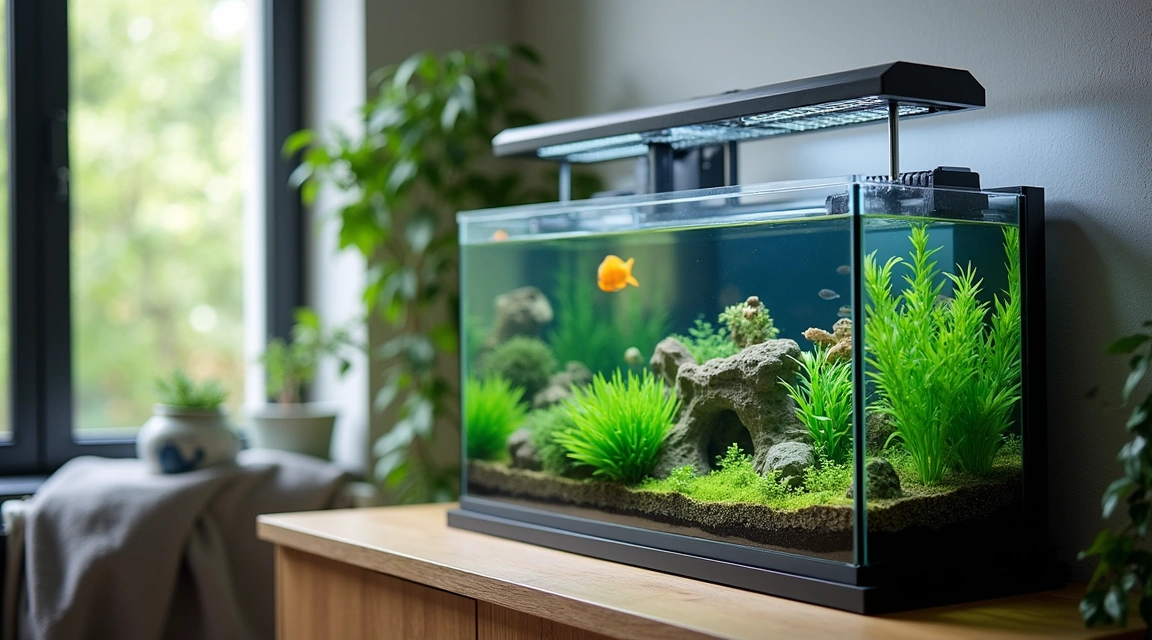
Lighting choices similarly depend on your inhabitants and aesthetic goals. A basic LED hood provides adequate illumination for viewing fish and supports low-demand plants like java fern or anubias. Programmable fixtures with dawn/dusk simulation can reduce fish stress and showcase colors more naturally throughout the day. High-output lights become necessary only when growing carpet plants, red-spectrum species, or maintaining photosynthetic corals in reef tanks.
Questions to Ask About Specific Products
Once you’ve narrowed options within a category, drill down with product-specific questions that reveal real-world performance beyond marketing descriptions.
What do long-term users report after six months? Initial impressions often differ from experiences after extended use. Look for reviews mentioning durability, whether performance degrades over time, and how the manufacturer handles warranty claims. A filter that works beautifully for three months but develops motor noise or leaks afterward represents a poor investment.
How available are replacement parts and media? Proprietary cartridges or hard-to-find components turn ongoing maintenance into an expensive treasure hunt. Equipment using standard-size media or widely available replacement parts provides long-term value and flexibility. Some manufacturers deliberately design systems requiring their branded consumables, locking you into ongoing purchases.
Does the product work as rated, or do you need to oversize? Many aquarium products carry optimistic ratings. Filters rated for 50 gallons often perform better at 30-35 gallons of actual capacity, especially in tanks with messy eaters or heavy stocking. Cross-reference manufacturer claims with user experiences to determine real-world capacity.
What specific problems do negative reviews mention? Don’t just check the star rating; read critical reviews carefully. If multiple users report the same failure point—plastic clips that break, impellers that seize, or thermostats that drift—consider it a design flaw rather than bad luck. Conversely, complaints about issues clearly caused by user error or misapplication carry less weight.
Can you access customer support if needed? Equipment eventually requires troubleshooting or warranty service. Companies with responsive customer support, clear warranty terms, and accessible phone or email contact demonstrate commitment to their products. Brands that hide behind automated systems or make warranty claims difficult often produce equipment that needs those services frequently.
Recommendations by Aquarist Type
Your experience level and tank goals should guide equipment choices more than price or popularity alone.
Beginners benefit most from reliable, easy-to-maintain equipment that minimizes variables. Choose HOB filters or all-in-one filter kits, preset heaters, and basic LED lighting. These options reduce the complexity of tank management while you learn water chemistry, feeding schedules, and fish behavior. Avoid the temptation to buy the cheapest option available; budget equipment often fails quickly or performs poorly, creating discouragement when problems arise.
Intermediate aquarists ready to expand their capabilities should consider canister filters for increased biological filtration, adjustable heaters for breeding projects or temperature-sensitive species, and programmable lighting for planted tank experiments. At this stage, investing in quality equipment that grows with your skills makes sense, even if initial costs run higher.
Advanced hobbyists managing specialized systems—reef tanks, high-tech planted setups, or rare species—need equipment matching their specific parameters. Prioritize precision, customization, and integration with controllers or automation systems. At this level, equipment becomes tools for achieving specific outcomes rather than general-purpose solutions. Expect to research extensively, and don’t hesitate to invest in professional-grade components when your livestock requires it.
The Verdict: Research Prevents Regret
Aquarium equipment represents a significant investment, both financially and in terms of the livestock depending on it. Asking thorough questions before purchasing—about compatibility, long-term costs, maintenance requirements, and real-world performance—helps you avoid common pitfalls and buyer’s remorse.
The best equipment for your tank isn’t always the most expensive or the highest-rated overall. It’s the option that matches your specific tank size, livestock needs, experience level, and maintenance preferences. By evaluating products against clear criteria and learning from other aquarists’ experiences, you can build a reliable system that supports healthy fish and plants while remaining enjoyable to maintain.
Take time to research thoroughly, ask questions in aquarium forums or local fish stores, and don’t rush major equipment decisions. Your aquatic inhabitants will thrive in a well-planned system built on informed choices rather than impulse purchases or marketing hype.